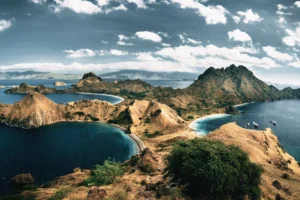
Komodo National Park is often praised for its turquoise bays and cinematic hills, but the beating heart of this UNESCO World Heritage site lies in its most famous resident: the Komodo dragon. With scales glistening in the sun and eyes that echo millions of years of evolution, these creatures are not just wildlife—they are a living myth. To walk among them is to step back in time, into a chapter of Earth’s story long before humans arrived.
Why Komodo Dragons Capture Our Imagination
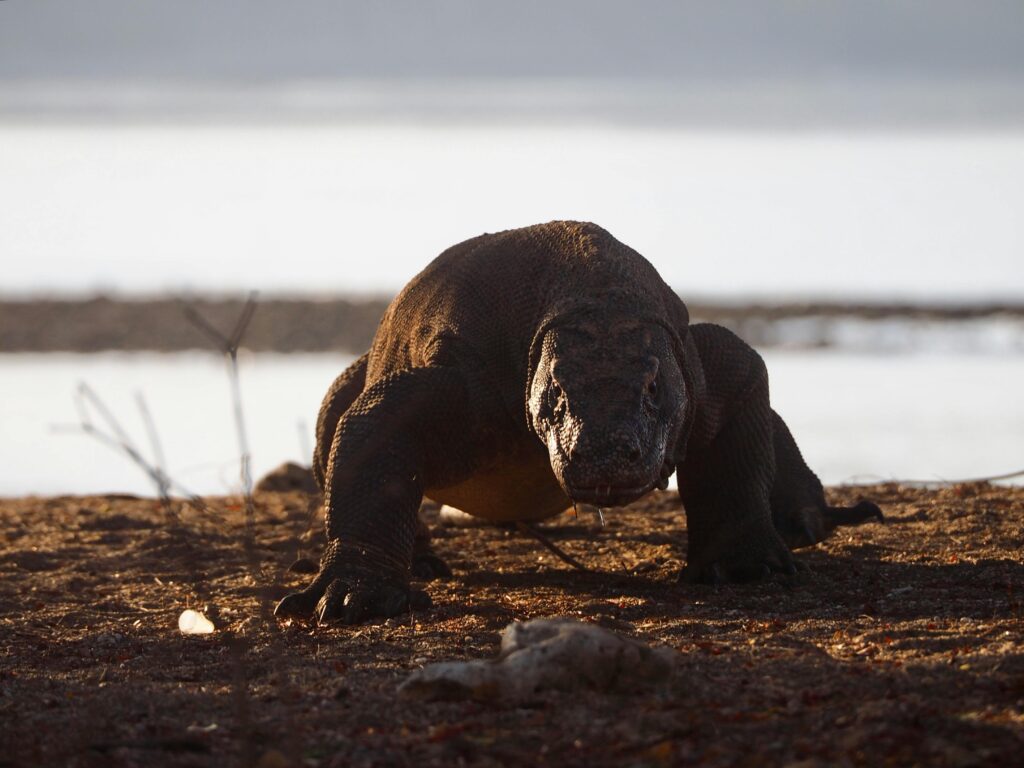
Unlike any other reptile in the modern world, Komodo dragons embody the survival of the ancient. They can grow up to three meters long and weigh more than 70 kilograms, moving with a blend of primal power and patient stealth. Their forked tongues flick in the air, reading invisible chemical trails, making you feel both awed and slightly vulnerable in their presence.
For locals, the dragons are ora, sacred beings woven into folklore. Stories tell of how villagers once regarded them as spiritual siblings, to be respected and never harmed. This blend of myth and biology makes every encounter more than a wildlife sighting—it’s a cultural immersion.
Island Habitats and Conservation
Dragons roam freely across Komodo Island and Rinca Island, each with ranger-guided trails where visitors can witness them in the wild. Conservation efforts are critical, as tourism, climate change, and habitat pressure threaten their numbers. Rangers not only guide but also act as guardians, ensuring that tourism sustains, rather than depletes, this fragile ecosystem.
The Thrill of the Encounter
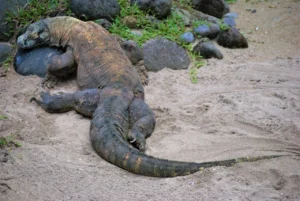
A guided walk is both cautious and thrilling. The silence of the savanna grass breaks with the sound of rustling leaves—and suddenly, a dragon appears, lumbering toward a shady tree or resting by the mangroves. Even standing meters away, the sheer presence of the animal feels electric.
Beyond the Dragons
While dragons are the stars, Komodo National Park offers layered experiences. Trekking the rugged hills, spotting wild deer (their prey), or watching fruit bats stream across the sunset sky adds richness to the dragon story.
How to Experience Responsibly
- Always follow ranger instructions—safety first.
- Do not feed or provoke the dragons.
- Support local conservation programs through fees and donations.
- Respect the cultural narratives around the dragons as sacred beings.
Where Myth Meets Reality
Seeing a Komodo dragon isn’t just wildlife tourism—it’s witnessing living prehistory. In an age of fast travel and digital moments, standing still before these creatures reminds us of our small place in Earth’s vast evolutionary tale.